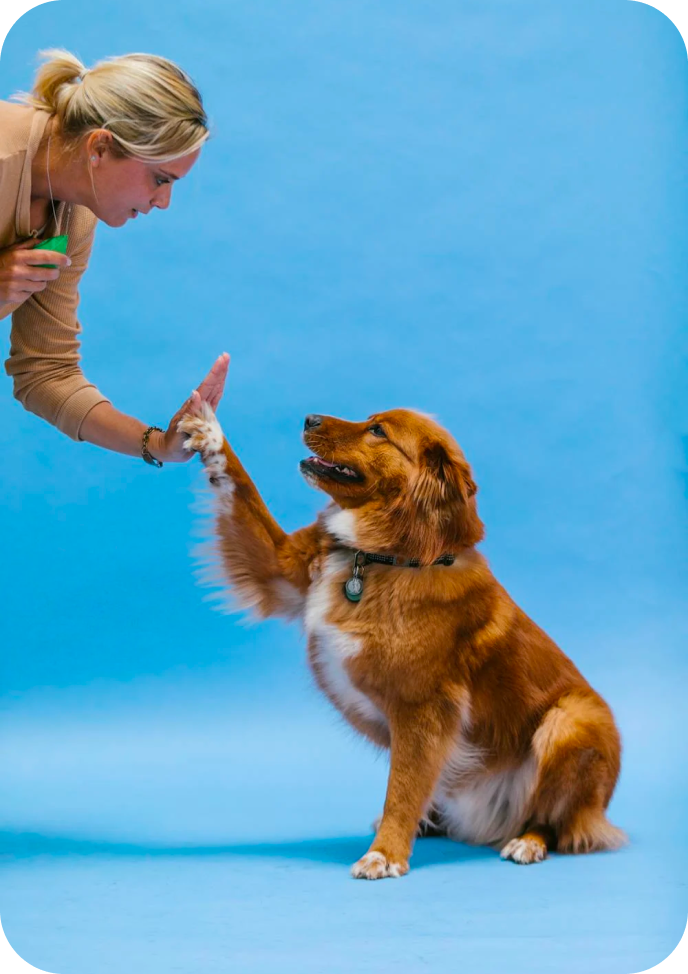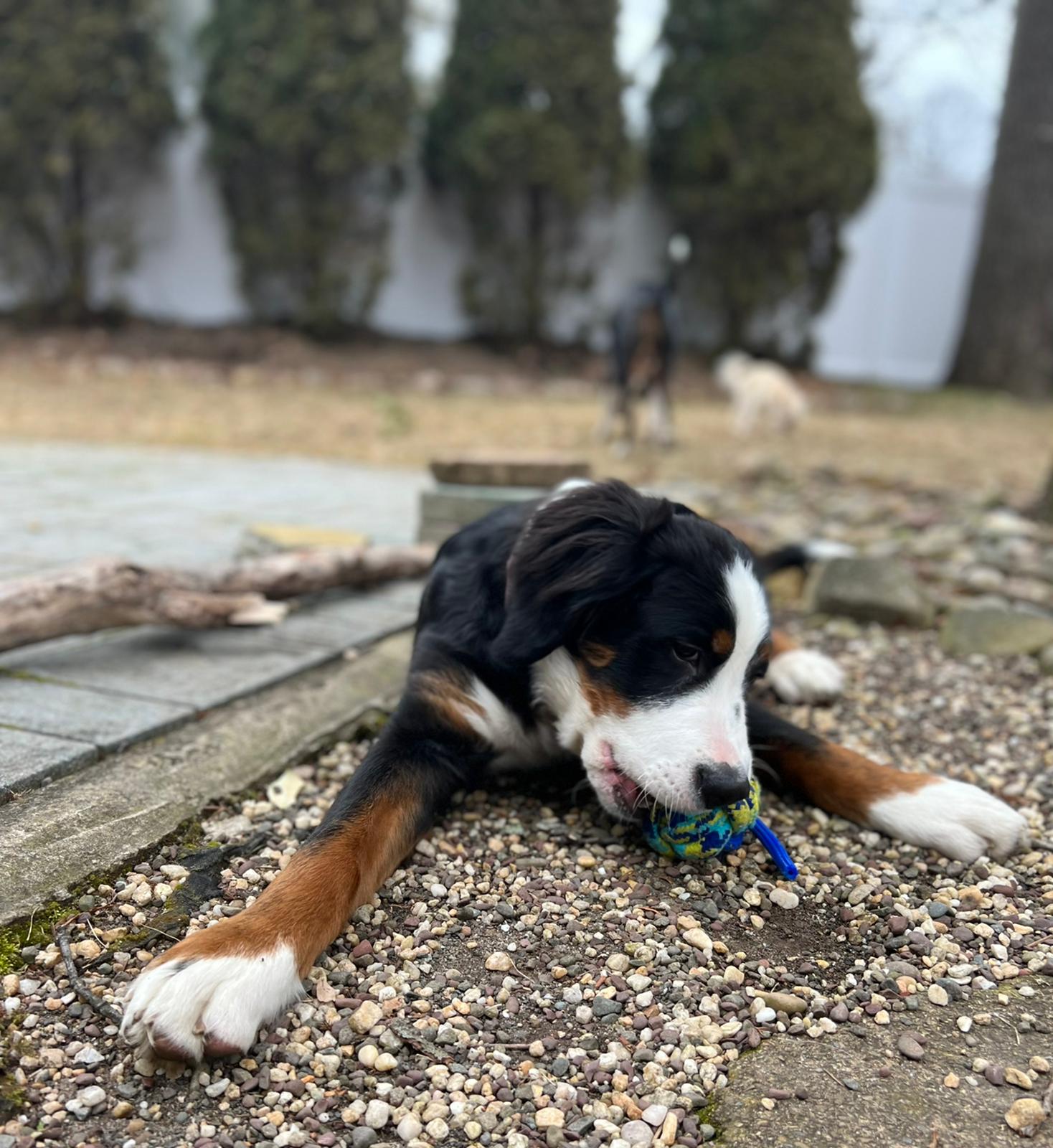
A slice of pizza on the sidewalk. A chicken bone under a bush. The sandwich your child just put down at exactly nose height. Every dog owner knows the half second where you see it, your dog sees it and you both move.
"Leave it" wins you that half second. It teaches your dog to turn away from something they want, because turning away pays better. This guide shows how to teach your dog to leave it, step by step, from your hand to the kitchen to your walks.
What Leave It Means
Leave It means "do not touch that, and do not pick it up". Its partner cue, Drop It, is for when the item is already in your dog's mouth. Our guide on how to teach your dog to drop it covers that one.
Use it for food on the floor, trash on walks, a dropped pill or the cat's dinner.
Before You Start
Choose a marker. A marker is a word like "Yes", or a clicker, that tells your dog the exact moment they got it right. A reward always follows it.
Have two kinds of treat. Use a so-so treat as the item your dog leaves, and a better treat as the reward. Early on, the reward should always beat the item.
Never pay with the forbidden item. The reward comes from your other hand or your pocket, never from the thing your dog was asked to leave. Otherwise your dog learns to look away for a second and then take it.
Keep sessions to a few minutes, two or three times a day, in a quiet room.
How to Teach Leave It, Step by Step
Stage 1: The closed fist
- Put a so-so treat in one hand and close your fist around it.
- Hold your fist low, near your dog's nose, and keep still.
- Most dogs sniff, lick and paw at it. Let them, and say nothing.
- The moment your dog backs off, looks away or looks up at you, mark "Yes" and give a better treat from your other hand. Bring the treat to your dog's mouth, so they are not reaching toward your fist to get it.
- Repeat until your dog moves away from your fist as soon as you offer it.
Stage 2: Add the cue
- Say "Leave it" once, at the same moment you present your fist.
- When your dog turns away, mark and reward as before.
- If your dog keeps pushing at your hand, say "Oops" in a calm, neutral voice. It tells your dog that choice did not earn the reward, so try again. Take your hand away for a moment, then start over.
Say the cue as you present your hand, not after. Once your dog is moving forward, it is too late for them to stop.
Stage 3: The open hand
- Hold the treat on your flat, open palm and say "Leave it".
- If your dog moves toward it, simply close your hand. No scolding, and no snatching your hand away.
- When your dog holds back or looks at you, mark and reward from your other hand.
- Once that is easy, practice with the treat in your other hand too, and bring the open hand a little closer to your dog.
Stage 4: On the floor
- Kneel down, say "Leave it" and place the treat on the floor, with your hand ready to cover it.
- If your dog goes for it, cover it. If they hold back, mark and reward from your hand.
- Build up slowly: the treat further from your hand, then standing up with a foot ready to cover it, then a treat dropped as if by accident.
Stage 5: Real items and real life
Practice with everyday objects, starting with dull ones like a pen, and build up to the things your dog really wants: socks, tissues, kids' toys, food on a plate.
Then take it outside. With your dog on a leash, set a toy or treat on the ground in your yard and walk past at a distance where your dog can succeed. Say "Leave it" and reward as they look away. Shrink the distance over many sessions.
A new, exciting item might mean starting again at the closed fist, and that is fine.
Counter Surfing
Counter surfing is when your dog puts their paws up on the counter or table looking for food. Leave It helps, but it works best alongside a few other habits:
- Clear the counters. Every time your dog finds food up there, the habit gets stronger.
- Supervise or block the kitchen. A baby gate or a crate is fine for times you cannot watch.
- Reward four paws on the floor. Catch your dog standing or lying calmly while you cook, and reward them right there.
- Give your dog a job. A mat near the kitchen with a chew to work on gives them something better to do.
Common Mistakes
- Repeating the cue. Say it once. If your dog does not respond, make it easier.
- Rushing. Move on only when your dog gets it right almost every time.
- Leaving temptation lying around. If your dog keeps finding trash or shoes between sessions, they learn the cue only applies sometimes.
Frequently Asked Questions
Can I use Leave It with other dogs or people?
It can help a calm, friendly dog walk past without stopping to say hello. If your dog barks, lunges or growls at other dogs or people, the Leave It cue on its own is not enough, because the reaction comes from big feelings that need their own plan. Our guide to leash reactivity explains what helps.
Should I scold my dog for grabbing the item?
No. If they get it, calmly trade it back with Drop It and make the next try easier. Scolding tends to make dogs grab faster, or wait until you are not looking.
My teenage dog used to be great at this. What happened?
Many dogs of 6 to 18 months lose skills for a while. Go back a few stages and rebuild. Our guide to the teenage dog phase explains why.
How Dogwise Can Help
For dogs of 6 to 18 months who counter surf, steal or scavenge on walks, Adolescent Essentials works on household manners and impulse control. For younger puppies who put everything in their mouths, Puppy Foundations covers chewing, counter surfing and first manners for puppies of around 16 weeks to 6 months.
Your dog lives in their trainer's own home, not a kennel, and practices in a real kitchen and on real walks. Then your trainer hands it over to you in your own home, with follow-up sessions to keep it going. Not sure whether a program is right for your dog? Read our honest guide to whether board and train is worth it.
Is your dog helping themselves to everything in reach? Book a free consultation and tell us about your dog. We will help you work out the right next step.