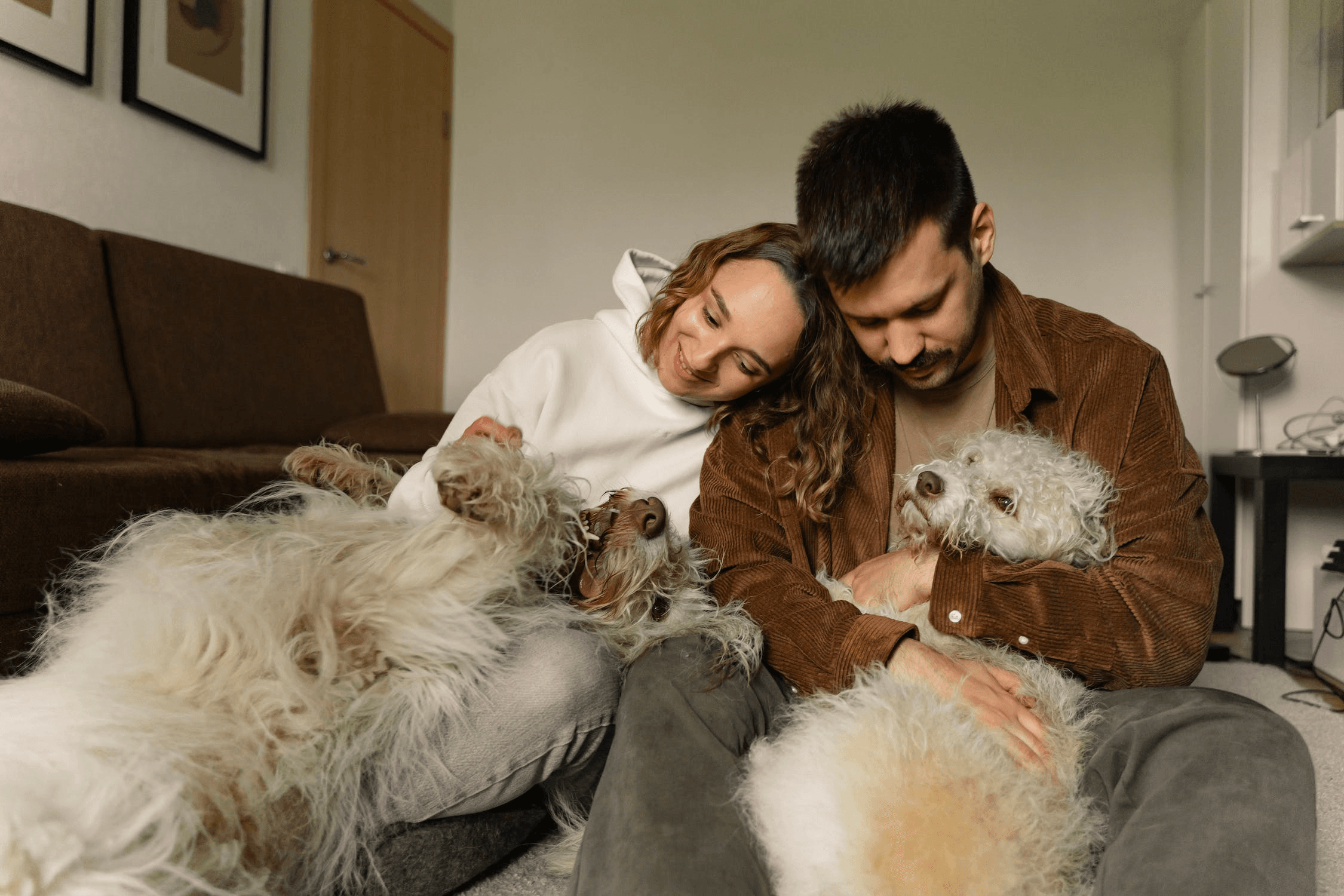
If you are reading this, there is a good chance you have already tried a few things. The online videos, a group class, a new harness, a lot of patience. Walks are still a battle, guests still get jumped on, or your dog's worries are starting to shape your whole day. Somewhere along the way someone mentioned board and train, and now you want to know: is board and train worth it?
Here is the honest answer from people who do this every day. Board and train can be one of the most effective ways to change a dog's behavior, when the program is built around your dog, your dog lives somewhere that feels like a real home, and the training does not stop at your front door. This guide covers how it works, who it suits, what it cannot do and what to ask before you choose a program.
What Is Board and Train?
Board and train means your dog lives with a professional trainer for a set period and trains every day as part of normal life. At the end, your dog comes home and the trainer teaches you how to keep the new skills going.
At Dogwise Academy your dog stays in their trainer's own home, not in a kennel or a facility. That matters more than it sounds. Dogs learn the whole picture around a skill, not just the word. A dog who learns to settle on a mat while people cook dinner, to wait at a real front door and to keep calm when the doorbell rings is practicing the exact situations they will meet at home.
How Does Board and Train Work?
At Dogwise, every program follows the same broad shape, and every plan is built for the individual dog.
- A free consultation. We learn about your dog, your home, your routine and what you want to change. Book yours here.
- A program and a trainer matched to your dog. Your dog's age, temperament, energy and family life decide the program and the trainer. You can see all of our programs here.
- Pick-up from your home. Your dog moves into their trainer's home and settles into a calm, predictable routine.
- Daily training in real life. Short sessions run through the day, with plenty of rest in between. You follow along through photos, videos and updates in your group chat.
- A handover in your home. Your trainer shows you each skill in your own house, you practice it with them, and you get a clear plan for the weeks ahead.
- Follow-up sessions and ongoing support. Follow-ups fine-tune what slips once your dog is home, and our lifetime support means you are never on your own with a question.
Who Board and Train Suits
Board and train is a strong fit when a dog needs a lot of consistent repetition, or a calm, skilled handler, and the family cannot provide hours of daily training for several weeks. It works well for:
- Puppies who need a solid start. Potty routines, crate comfort, chewing, nipping and first manners. See Puppy Foundations, for puppies of around 16 weeks to 6 months.
- Teenage dogs who have stopped listening. Pulling, jumping, bolting through doors and selective hearing. See Adolescent Essentials.
- Big, strong or fast-growing dogs. Manners matter more when your dog outweighs a child. See Big Puppy and Strong Companion.
- Anxious, reactive or rescue dogs. Here a skilled trainer can control the setting and the pace in a way that is very hard to arrange on a normal day. See Anxiety Support, Reactivity and Aggression Reset and Rescue Restart. For separation problems, part of the work has to happen in your own home, and your trainer will tell you honestly whether board and train is the right fit.
The Pros and Cons at a Glance
The pros:
- Daily, consistent practice with a professional, without hours of your own time
- Your dog learns in a real home, so the skills match everyday life
- A calm, skilled handler for dogs who are hard to train in the middle of family life
- A handover in your home and support after the program ends
The cons:
- It is a bigger upfront investment than a group class
- You are apart from your dog for the length of the program
- Your dog still needs practice with you at home to keep the skills going
- Some problems, such as fear of being alone at home, need part of the work done in your own house
The Honest Part: What Board and Train Cannot Do
We would rather you hear this now.
Training is not something that gets installed in your dog. A cue your dog learned with their trainer is tied, at first, to that person and that place. When your dog comes home, they need to learn that the same word means the same thing with you, in your kitchen, on your street. That is exactly what the handover and the follow-up sessions are for, and it is why your part matters.
Your dog may look like they have lost ground for the first few days. Home has different smells, sounds, people and freedoms. Many dogs are tired, a little unsettled or extra excited for a day or two. This is normal, and it is far too early to judge weeks of work.
Anxiety, reactivity and aggression are about improvement, not a cure. The aim is a dog who copes better, recovers faster and is easier to manage. Many dogs make big changes. Some will always need a plan in certain situations, and a good trainer will tell you that plainly.
No one can promise a timeline. Every dog learns at their own pace. A good trainer can give you an aim and a typical program length, but your dog sets the pace.
What Happens After Board and Train
The first weeks at home are where the results are kept or lost. Families who keep things simple and structured usually see the smoothest return. Your trainer will tailor this to your dog, but the basics look like this:
- Keep the routine your dog learned. Meals at set times, the crate or a settle spot in daily use and a calm start to each day.
- Keep the first days quiet. Skip the dog park, parties, busy stores and big visits until your trainer says your dog is ready.
- Practice little and often. Two short sessions a day do more than one long one.
- Use the same words and rules across the whole household. Mixed messages are the fastest way to undo good habits.
- Rewatch the videos from the program. Copy your trainer's hands, posture and tone. They are your best reference.
- Book your first follow-up early. Don't wait for something to go wrong, and message your trainer as soon as you have a question.
If crate time is part of your dog's routine, our guide to crate training explains how to keep it a calm, safe place.
Board and Train, Group Classes or Private Lessons?
All three can work. They suit different dogs and different families.
Group classes are affordable and social, and they are a great way to learn the basics. They are harder for dogs who are reactive, very anxious or too excited to think around other dogs, and most of the practice happens at home between classes.
Private lessons teach you directly, in your own setting. Progress depends on how much practice you can fit in between sessions.
Board and train gives your dog daily, consistent work with a professional, then teaches you to carry it on. It suits families short on time and dogs who need a lot of repetition or a calm, experienced handler. Many families pair a program with follow-up lessons later on.
How Long Does Board and Train Take?
Most programs run between two and six weeks. Puppy and manners programs usually sit at the shorter end. Anxiety and reactivity programs usually need longer, because the work moves at the pace the dog can handle. Your consultation is where the right length for your dog gets decided.
How Much Does Board and Train Cost?
The price depends on the length of the program and what your dog needs. Board and train costs more than a group class because your dog is living with a professional and training every day, with handover and follow-up support included. Payment plans are available, and your free consultation is where you get a price for your dog's plan, before you decide anything.
Questions to Ask Any Board and Train Program
Whoever you choose, these questions will tell you a lot:
- Where will my dog live and sleep, and how many other dogs will be there?
- What will a normal day look like, including rest and downtime?
- How will I see my dog's progress while they are away?
- What methods does the trainer use, and how will they be explained to me?
- How will the skills be transferred to me and my family at the end?
- What support do I get after my dog comes home, and for how long?
A good program will be glad you asked.
Frequently Asked Questions
Will my dog miss me or forget me?
Dogs bond with more than one person, and time with a trainer does not replace the bond they have with you. Most dogs settle into their trainer's routine within a few days, and the reunion at handover is usually a very happy one.
Is board and train stressful for my dog?
Any change of home takes some adjusting, and the first few days are usually the most unsettled. A calm home, a predictable routine and plenty of rest help most dogs settle in quickly. Your trainer watches your dog's appetite, sleep and body language closely, and the pace of training follows how your dog is coping.
Will my dog only listen to the trainer?
At first your dog may respond more readily to the person who taught them. That is normal and it is why the handover happens in your home, with you practicing every skill. With consistent practice your dog learns that the cues mean the same thing with you.
Is my puppy too young for board and train?
Puppy Foundations is designed for puppies of around 16 weeks to 6 months. A structured start at this age makes potty training, crate time and manners much easier later.
Can board and train help with aggression?
It can help many dogs, as part of a careful plan with clear safety steps at home. The goal is steady improvement and good management. If your dog has bitten, or the aggression started suddenly, see your vet first, then talk to us before working on it alone.
So, Is Board and Train Worth It?
It is worth it when four things are true. The program is built around your dog. Your dog lives in a real home while they learn. You are shown, in your own house, how to keep it going. And support does not end the day your dog comes home. That is how Dogwise works. We are not here to make training sound easy. We are here to make it work.
Ready to talk it through? Book a free consultation and tell us about your dog. No pressure and no scripts, just an honest conversation about what would help.
