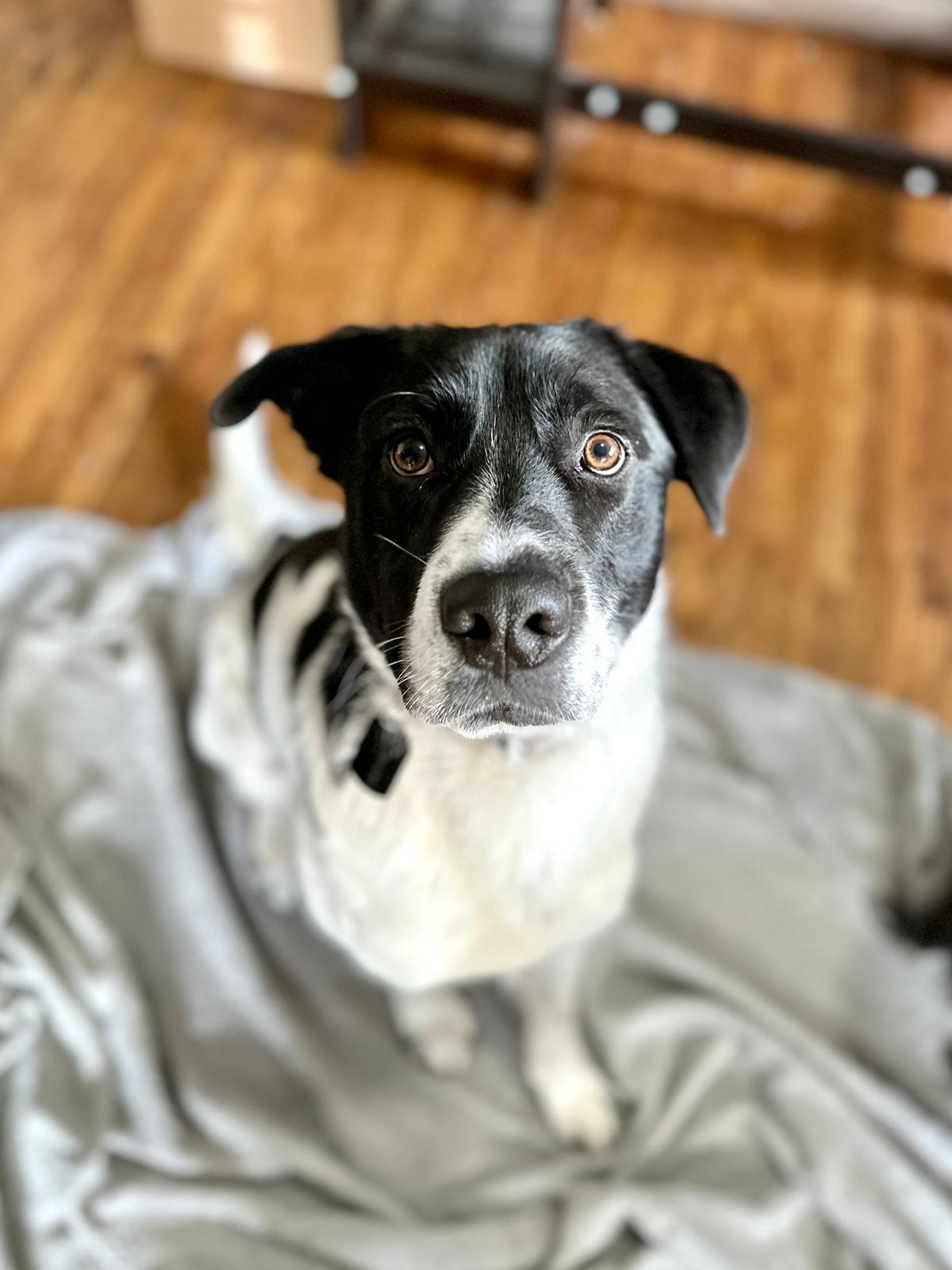
You call your dog's name from across the room. Nothing. Not a flick of an ear. Then you rustle the treat bag and they appear at your feet in seconds. Your dog can hear you perfectly well. Their name just does not mean anything worth turning around for yet.
The Name Game changes that. It is a short, simple exercise that teaches your dog to respond to their name by turning to look at you, because good things happen when they do. This guide covers why your dog's name should always mean good news, how to play the game step by step, how to add distractions and how to use it on walks.
Why Your Dog's Name Should Mean Good Things
Think of your dog's name as a tap on the shoulder. It just means "Look at me, I have something for you." It is the start of the conversation. Once your dog is looking at you, you can ask for a sit, a recall or a "Let's go".
For that to work, the name has to be good news every time. Two habits undo it quickly:
- Using the name to scold. If your dog hears their name in a sharp voice every time they steal a sock, the name starts to mean trouble. Never use your dog's name to scold them. If you need to interrupt something, use a different word, or calmly walk over and help them.
- Saying it all day with nothing following. A name repeated in passing, or called again and again while your dog is busy, slowly becomes background noise.
Keep the name for happy moments, say it once and make it worth their while.
What You'll Need
- Small, soft treats your dog really likes
- A quiet room to start in
- A marker: a word like "Yes" or a clicker that tells your dog the exact moment they got it right, always followed by a reward
- A leash, or a long training leash, for practice outside
How to Teach Your Dog to Respond to Their Name
- Pair the name with a treat. Say your dog's name once in a happy voice, then give a treat. Your dog does not need to do anything yet. Repeat this five to ten times in a row. You are teaching your dog that their name predicts something good.
- Say it when they are not looking. Wait until your dog is sniffing around or looking away, then say their name once and follow it with a treat.
- Wait for the look. Now say the name once and pause. The moment your dog turns their head toward you, say "Yes" and reward. If they have not looked after a few seconds, do not repeat the name. Make a kissy noise or take a couple of steps away. When they look, reward, and make the next try a little easier.
- Ask for a quicker turn. Slowly shorten how long you wait. Start by rewarding a look that comes within a few seconds, then only the quicker ones, until you are paying for an instant turn of the head. Go at your dog's pace.
- Move to new places. Play in every room of the house, then the yard and the front step. Each new place is a little harder, so start easy every time.
Adding Distractions
Dogs learn in context. A dog who turns to their name in the kitchen may not turn at the park yet. Build up in small steps:
- A toy on the floor, a few feet away
- Another family member walking around the room
- The yard, with all its smells and sounds
- A quiet street
- The edge of a park, far from other dogs
Harder places deserve better rewards, so save your tastiest treats for these. If your dog misses their name twice in a row, the step was too hard. Move further away from the distraction or go back to an easier place, get some wins and try again.
Using the Name Game on Walks
Walks are where the Name Game really pays off. Carry treats and play little and often.
- Say your dog's name when they are only mildly interested in something, like a patch of grass, and reward the turn.
- Reward the check-ins they give you without being asked. A dog who looks up at you on their own is doing exactly what you want.
- Use their name early, before your dog is locked onto a squirrel or another dog. Once they are staring, any cue is much harder to hear.
- Follow the turn with something useful, like "Let's go" or a hand target. Our post on teaching "Touch" shows you how.
If your dog checks in often but struggles to keep their attention on you, our guide on teaching your dog to focus on you builds on this game.
Why the Name Game Sometimes Stalls
- The rewards are not good enough. Some dogs work for kibble, others need chicken or cheese. Find what your dog really wants.
- Not enough practice. A handful of quick turns scattered through the day works better than one long session.
- The name gets repeated. Say it once. If your dog does not respond, help them out and make the next try easier.
- The name comes before something unpleasant. For bath time, nail trims or leaving the park, walk over and get your dog instead.
The Next Step: Coming When Called
A dog who turns to their name is ready to learn to come all the way to you. Our guide on how to teach your dog to come when called walks you through it, step by step.
Frequently Asked Questions
My rescue dog ignores their name. Should I change it?
You can. Some families pick a fresh name and teach it from the first step. Others keep the old name and rebuild it the same way. Either works, as long as the name only ever means good things from now on.
Should I say my dog's name before every cue?
It helps when your dog is not already looking at you. When they are already paying attention, you can skip it and just give the cue.
How Dogwise Can Help
Puppy Foundations, for puppies of around 16 weeks to 6 months, includes the Name Game alongside Sit, Down and recall, practiced every day in their trainer's home. Teenage dogs often seem to forget their own name, as our guide to the teenage dog phase explains. For dogs of 6 to 18 months, Adolescent Essentials works on impulse control, leash walking and recall in real life. Our programs finish with a handover in your own home and follow-up sessions, so the skills keep working with you.
Want a dog who turns when you say their name? Book a free consultation and tell us about your dog. We will help you find the right next step.
