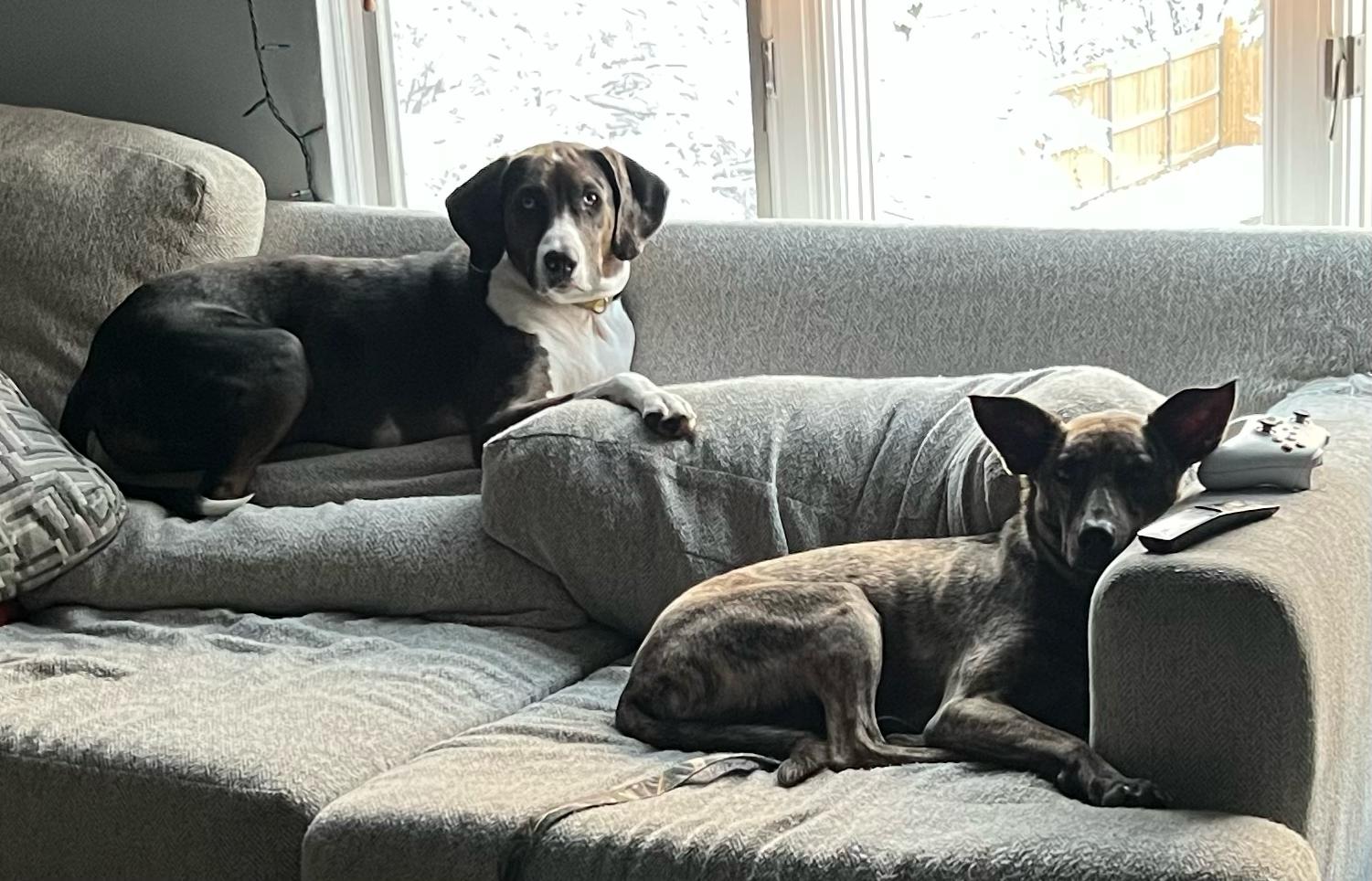
On a walk, your dog is busy with everything except you. Smells, birds, leaves, the dog three houses down. At home, the only time they look at you with real interest is when the fridge opens. You start to feel like the person who just happens to be holding the leash.
Some dogs find focus easier than others, but it is also a habit, and you can build it. This guide shows how to teach your dog to focus on you with a simple attention game: rewarding eye contact and check-ins, introducing a marker word or clicker, then building duration and adding distractions.
Why Focus Matters
Every cue you give starts with your dog's attention. A dog who is looking at you can hear what you ask. A dog who is staring at a squirrel probably cannot.
The aim of this game is a dog who checks in with you often, by choice. Many families find that walks feel calmer and cues land more easily. It is also a great game for a new dog getting to know you, and for teenage dogs whose attention is suddenly everywhere.
What You'll Need
- Small treats, including part of your dog's daily food for easy moments and something tastier for harder ones
- A favorite toy, if your dog loves to play
- A marker: a word like "Yes" or a clicker that tells your dog the exact moment they got it right, always followed by a reward
- A quiet room to start in
Step 1: Teach Your Dog What the Marker Means
Before your dog can learn from a marker, they need to know it means something good is coming. Say "Yes" (or press the clicker) and give a treat right away. Repeat ten to fifteen times. Your dog does not have to do anything yet.
You can tell it is starting to work when your dog's head snaps toward you at the sound. A clicker sounds the same every time, and a word is always with you. Both work well, as long as every mark is followed by a reward.
Step 2: Reward Every Check-In
In a quiet room, stand or sit with your treats ready and simply wait. Do not call your dog, wave the treat or make noises. The moment your dog glances at you, mark it and reward.
Try to mark the instant their head starts to turn toward you, because that is the choice you are rewarding. Then toss the treat a little way off, so your dog has to turn away to eat it. When they look back, mark and reward again.
When you finish, say a clear "All done" so your dog knows the game has stopped. When you are ready to play again, say their name and reward the turn. Our post on the Name Game builds this skill in more detail.
Step 3: Build Duration
Once your dog is checking in easily, wait a moment longer before you mark. Half a second of eye contact, then a full second, then two. Go slowly and mix in some easy ones, so it does not get harder every single time.
If your dog looks away before you mark, do nothing. Wait for them to look back, then ask for a little less next time. You are not after a staring contest, just a soft, relaxed look in your direction.
Step 4: Add Distractions
Now take the game to harder places, one small step at a time: a different room, the yard, the front step, a quiet street, then busier places. Stay far enough from distractions that your dog can still take food and look back at you.
Two tips make a big difference here:
- Pay more in harder places. Kibble might be fine in the living room. Near a squirrel, your dog deserves something much better.
- Match the reward to the distraction. If your dog looks away from a toy, reward with the toy. If they look away from a smell, mark and let them go back and sniff. The thing they wanted becomes the reward for checking in.
Real-life rewards count too. A game of chase with your dog chasing you, a toy from your pocket or permission to greet a friend all show your dog that paying attention pays off. A hand target is another great way to bring attention back to you, and our post on teaching "Touch" explains it.
Step 5: Mix Up Your Rewards Over Time
When your dog is checking in often, start to be a little choosier. Mark and reward only the better of every two check-ins, such as a quicker turn or a longer look. Acknowledge the others with a smile or quiet praise.
Over time, mark and reward about one check-in in three, then fewer. Make the change slowly, and keep paying well for the really good ones. Whenever you do mark, a reward still follows.
Training Tips
- Every dog learns at their own pace. A confident, eager dog may move through these steps quickly. A new rescue dog who is still getting to know you may need much longer at each step.
- Never force eye contact. Some dogs find a direct stare uncomfortable. A relaxed glance toward your face is plenty.
- Replay the early steps when life changes. A move, a new baby or a new dog in the house is a good time for a refresher.
Frequently Asked Questions
My dog only pays attention when I am holding food. What can I do?
Keep treats in a pocket, a pouch or on a nearby shelf, so your hands are empty while you wait. Mark first, then reach for the reward. Your dog learns that looking at you is what makes treats appear.
How does this help a dog who reacts on walks?
Check-ins give your dog something to do instead of staring at a trigger. Our guide to leash reactivity explains how focus work fits into a wider plan, practiced at a distance your dog can cope with.
How Dogwise Can Help
Focus is the foundation every other skill rests on, and teenage dogs often lose it first. For dogs of 6 to 18 months, Adolescent Essentials works on impulse control, leash walking and recall in real life, every day, while your dog lives in their trainer's home. For strong dogs over 12 months who know the basics but need more focus and control, see Strong Companion. Our programs are built around your dog and finish with a handover in your home and follow-up sessions.
Want a dog who checks in with you on every walk? Book a free consultation and tell us about your dog. We will help you find the right program for them.
