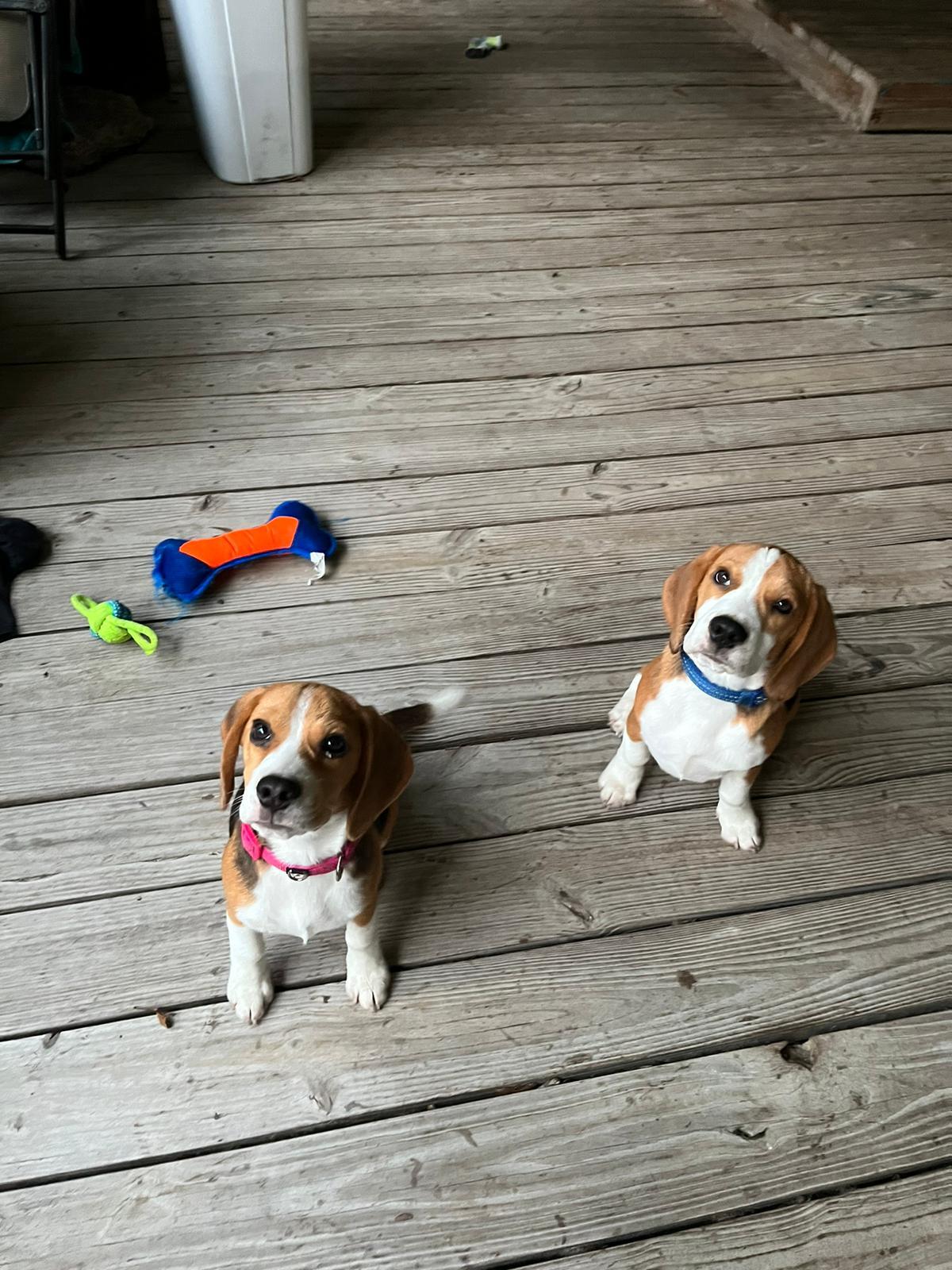
The front door opens and your dog is through it before you are. The car door opens and they leap out into the parking lot. You put the food bowl down and get mugged on the way. Each is only a few seconds of chaos, but some are genuinely risky.
"Wait" is the cue for those few seconds. It asks your dog to pause and not move forward until you say so. This guide shows how to teach your dog to wait, starting at the food bowl, then doors, the car and the curb, plus Wait vs Stay and what to do when it falls apart.
Wait vs Stay
The two cues often get mixed up:
- Wait means "pause, and do not go forward yet". Your dog can sit, stand or shift around, as long as they do not move ahead. It usually ends with your dog going through the door, out of the car or to their food.
- Stay means "hold this exact position until I come back and release you". It is for longer, stiller moments.
Give each word one meaning, used the same way by everyone in the house. Our guide on how to teach your dog to stay covers the other half.
Before You Start
Choose a release word. This is the word that tells your dog they are free to move, such as "Okay" or "Free". Use it to end every wait, so your dog learns that the release word, not the door opening, is the signal to go.
Choose a marker and a "try again" word. A marker is a word like "Yes", or a clicker, that tells your dog the exact moment they got it right. A treat always follows it. A calm, neutral word like "Oops" tells your dog that choice did not earn the reward, so try again.
A solid sit helps, but Wait is about not moving forward, whatever position your dog is in.
Wait at the Food Bowl
Mealtimes are the easiest place to start. You practice every day, and the reward is built in.
- Hold your dog's bowl at chest height. Asking for a sit first is fine.
- Say "Wait" once and start to lower the bowl slowly.
- If your dog moves toward it, say "Oops" and lift the bowl back up. When they settle back, start lowering again.
- When the bowl reaches the floor and your dog is still holding back, say your release word and let them eat. At first, release almost right away.
- Over the next meals, build up slowly: stand up straight, count to two, then three, then take a step back before you release.
If your dog gets very worked up, barking or jumping at the bowl, calmly walk away with it for a moment, then try again with an easier step.
Wait at Doors
Start with an inside door or the back door to a fenced yard. Keep your dog on a leash for any door that opens onto the street.
- Stand at the closed door with your dog beside you and say "Wait" once.
- Put your hand on the handle. If your dog stays back, mark "Yes" and reward.
- Open the door an inch. If your dog moves toward the gap, say "Oops" and gently close it.
- When your dog holds back with the door slightly open, reward. Open it a little wider over many repetitions.
- Finish with your release word and walk through together.
A dog who waits at the front door is also much easier to manage when guests arrive. Our post on teaching your dog to greet people politely takes it from there.
Wait in the Car
Leaping out of the car is one of the riskiest habits a dog can have, especially in a parking lot.
- Clip on the leash before the door opens wide enough for your dog to get out, reaching in through a part-open door if you need to.
- Say "Wait" and open the door a crack. If your dog pushes toward the gap, ease it closed again, taking care not to catch them.
- When your dog holds back with the door open, pause for a second, then release them to jump out.
- Practice in your driveway many times before you count on it somewhere busy.
Whether your dog rides in a crate or on the seat, the door opening is not the signal to go. The release word is.
Wait at the Curb
- Walk up to the curb on a quiet street and stop. Say "Wait".
- Reward your dog for pausing beside you.
- When it is safe, say your release word, or a walking cue like "Let's go", and cross together.
Many dogs start to pause at the curb out of habit. That is a lovely bonus, but never a reason to take the leash off near traffic. Wait is a manners skill, not a safety net.
Training Tips
- Say it once. "Wait, wait, wait" teaches your dog that the first few do not count.
- Release every wait. Do not just wander off and leave your dog to work it out.
- Use real life. Meals, walks, car rides and throwing a toy are all chances to practice, with every family member.
Troubleshooting
My dog waits for me but not for anyone else.
Have each family member practice the bowl and door steps from the beginning. Dogs learn who the rules apply to.
My dog bolts the moment I touch the door.
Go back to a hand on the handle, rewarding a still dog, before you open anything. Practice at quiet times, not when you are rushing out.
My dog used to wait and has stopped.
If your dog is between 6 and 18 months, this is very common. Go back to easier steps for a while. Our guide to the teenage dog phase explains why it happens.
My dog stiffens or growls when I touch the food bowl.
Stop the bowl exercise, give your dog space while they eat and do not punish the growl. It is a warning, and you want to keep it. Guarding food needs its own careful plan, so talk to a professional trainer. If it started suddenly, check with your vet first.
How Dogwise Can Help
Adolescent Essentials is built for dogs of 6 to 18 months who bolt through doors, pull on walks, jump on guests or ignore cues. For younger puppies, Puppy Foundations builds first manners for puppies of around 16 weeks to 6 months.
Your dog lives in their trainer's own home, not a kennel, so they practice at real doors and real mealtimes every day. Then your trainer shows you how to keep those door manners going in your own home, with follow-up sessions to fine-tune them.
Does your dog treat every open door as an invitation? Book a free consultation and tell us about your dog. We will help you find the right next step.
