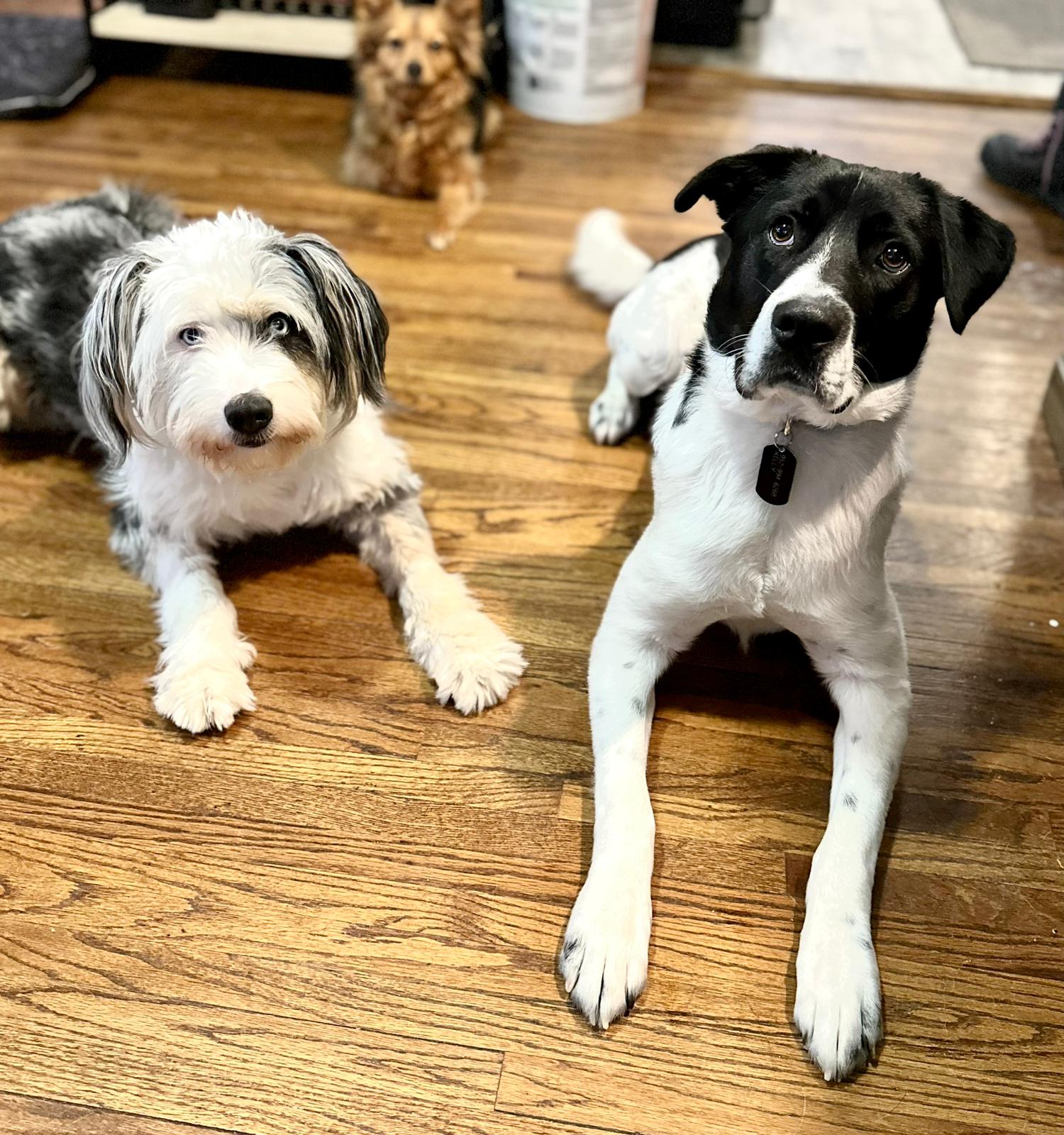
You sit down to dinner and your dog circles the table, nose at plate height. You stop to chat with a neighbor and your dog winds the leash around your legs. In both moments, you wish your dog would just lie down and relax.
A solid Down gives you exactly that, and it is the start of a dog who knows how to switch off. This guide covers luring a down from a sit, what to do when your dog stands up instead, capturing a down, adding the word and duration, and turning it into a calm settle.
Why Down Is Worth Teaching
A dog who is lying down is often calmer than one who is standing or sitting. That makes Down the natural starting point for settling while you eat, waiting at a café, staying calm at the vet or relaxing while guests visit.
What You'll Need
- Small, soft treats your dog enjoys
- A quiet room with a rug or mat, since many dogs find it hard to lie down on a slippery floor
- A marker: a word like "Yes" or a clicker that tells your dog the exact moment they got it right, always followed by a reward
- A release word, like "Okay" or "Free", that tells your dog they are free to move
It helps if your dog already knows Sit. If not, start with our guide on how to teach your dog to sit.
How to Teach Your Dog to Lie Down From a Sit
- Start with your dog in a sit. Hold a treat between your fingers, right at their nose.
- Move it slowly straight down. Lower your hand to the floor just in front of their front paws. Their nose should follow.
- Slide it along the floor. Slowly draw your hand a few inches away from them along the ground, making an L shape. Many dogs ease their front legs forward and fold into a down.
- Mark and reward on the floor. The moment their elbows and rear end are both on the ground, say "Yes" and place the treat between their front paws. Rewarding on the floor keeps your dog in position.
- Release. Say your release word, encourage your dog up and start again.
Repeat five to ten times, take a break, and end each session on a success.
When Your Dog Stands Up Instead
This is the most common problem, and it is usually about the hand, not the dog.
- Slow down. If your hand moves too fast or too far forward, your dog stands up to follow it. Keep it slow and close to their paws.
- Reward smaller steps. If your dog lowers their head but not their body, reward that. Next, wait for an elbow to dip. Build it up in small pieces.
- Calmly start again. If your dog pops up, say a calm, neutral word like "Oops". This is a no reward marker: it tells your dog that choice did not earn the reward, so try again. Use it sparingly while your dog is still learning. Ask for a sit and have another go.
- Try a tunnel. Sit on the floor with one knee raised and lure your dog under your leg. To reach the treat, many dogs lie down without thinking about it.
Never push your dog into position. Pushing tends to make dogs brace against you and can make lying down feel unsafe. Some nervous dogs find lying down a vulnerable position, so practice somewhere your dog feels relaxed. If your dog seems stiff, sore or suddenly unwilling to lie down, see your vet to rule out pain.
Capturing a Down
Capturing means marking and rewarding something your dog does on their own, without being asked. It suits dogs who do not like following a hand.
Keep a few treats in your pocket in the evenings. Whenever your dog lies down by themselves, say "Yes" and place a treat between their paws. Many dogs soon start lying down on purpose, and you can then add the word just before they do.
Adding the Word and Fading Your Hand
- Lure with an empty hand. Use the same movement with no treat in that hand, then reward from your other hand.
- Say "Down" first. Say the word once, pause, then give the hand signal, so your dog learns the word comes first.
- Shrink the hand signal. Over many sessions, point toward the floor, then a few inches above it, then smaller still.
- Try new positions. Practice while you sit, kneel or stand, and with your dog beside you as well as in front.
Keep "Down" only for lying down. When your dog jumps up or climbs on the couch, use a different word such as "Off", so the cue stays clear.
Building Duration
Once your dog lies down on cue, ask them to stay there a little longer. Place one treat between their paws, pause, then another, spacing them out a little more each time. Then give your release word. If your dog gets up before you release them, calmly reset and make the next one shorter. Our guide on teaching your dog to stay then adds distance and distractions.
Down as a Calm Settle
A down is most useful when it becomes a settle: a relaxed rest rather than a held position. Practice in quiet moments, like on a mat while you watch television. Quietly reward signs that your dog is relaxing, such as rolling onto one hip, resting their chin or letting out a big sigh.
If your dog finds it hard to calm down when excited, try our game for switching from excited to calm. Once your dog knows Sit, Down and Stand, puppy push-ups are a fun way to practice all three.
Frequently Asked Questions
Why does my dog lie down at home but not at the park?
Lying down outside can feel exposed, and the ground may be wet, cold or full of interesting smells. Start somewhere quiet, use better rewards and accept a shorter down at first.
My dog lies down but pops straight back up. What should I do?
Reward quickly on the floor between their paws, and give several treats in a row before your release word, so staying down is where the good things happen.
How Dogwise Can Help
In Puppy Foundations, for puppies of around 16 weeks to 6 months, and Adolescent Essentials, for dogs of 6 to 18 months, your dog lives in their trainer's home and practices everyday cues like Down in real life. Then your trainer shows you how to use them at home, with follow-up sessions afterward.
Want a dog who can settle when you need them to? Book a free consultation and tell us about your dog. We will help you find the right program for them.
