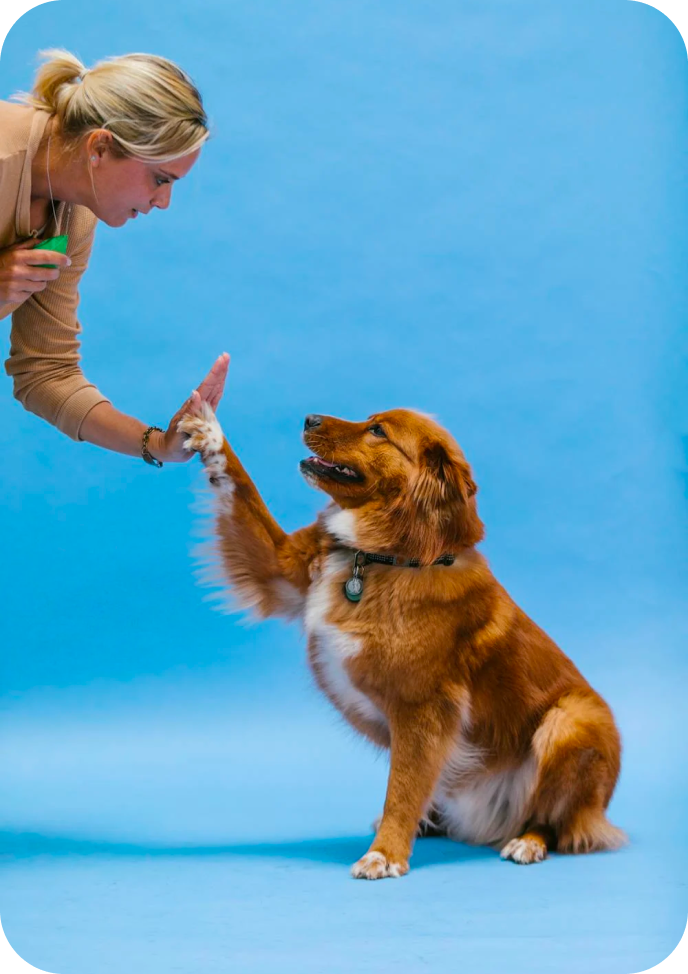
Your dog is having the time of their life: zoomies around the living room, a toy tossed in the air, a happy bark. Then a guest walks in or the kids start running, and the excitement turns into jumping, mouthing and a dog who tunes you out. For many dogs, getting excited is easy. Calming back down is the hard part.
Go Wild and Freeze is a simple game that teaches exactly that. You get your dog a little excited, then stop, and reward them for settling. This guide covers how to play, when to stop, and how to use the game for greetings, for kids and dogs, and as a path to a settle on a mat.
How This Game Helps Your Dog Calm Down
The game builds impulse control, which is your dog's ability to pause instead of acting on every urge. Through short rounds, your dog learns:
- That calm behavior gets rewarded, even right after excitement
- How to settle quickly after being wound up
- That a person standing still and quiet means "four paws on the floor, please"
- That calm pays off with everyone, not just one person
What You'll Need
- A quiet room or yard with space to move around
- Small, tasty treats in a pocket or pouch, and a slightly hungry dog
- A regular leash and collar or harness, or the equipment your trainer set you up with, so you can calmly guide your dog
- A marker: a word like "Yes" or a clicker that tells your dog the exact moment they got it right, followed by a reward
- A release word: the word that tells your dog they are free to move, such as "Okay" or "Free"
- A dog who already knows how to sit. If yours does not yet, start with our guide to teaching "Sit".
How to Play, Step by Step
- Start with a sit. Ask your dog to sit. When they do, mark and give a treat.
- Go wild, gently. Say "Go wild" in a happy voice and move around for a couple of seconds: a few bouncy steps, a clap, a short jog. Keep the first rounds low-key. You want a little excitement, not a frenzy.
- Freeze. Stop moving, bring your hands in to your chest, stand still and quiet, and look slightly away. Do not say anything. Just wait.
- Reward the sit. Most dogs offer a sit after a moment, because sitting just paid off. The instant your dog sits, mark and give a treat close to your body. If they jump up instead, stay still, turn slightly away and wait for four paws on the floor, then for the sit.
- Repeat a few times. Three to five rounds is plenty for one session. Over a few sessions, many dogs start sitting faster.
- Add the word. Once your dog sits quickly almost every time you freeze, say "Freeze" just as you stop.
- Turn up the fun slowly. Make the wild part a little longer and bouncier, or add a toy. If your dog takes much longer to settle, the last round was too exciting, so make the next one smaller.
- Take it on the road. Play in different rooms and with different family members. With several people, everyone freezes together, and when your dog sits, everyone rewards, closest person first.
How to Tell When to Stop
End the session, or make the next round much calmer, if your dog:
- Takes longer and longer to settle
- Starts mouthing, grabbing clothes or jumping and cannot stop
- Snatches treats hard or will not take them
- Has zoomies that do not wind down, or is panting heavily
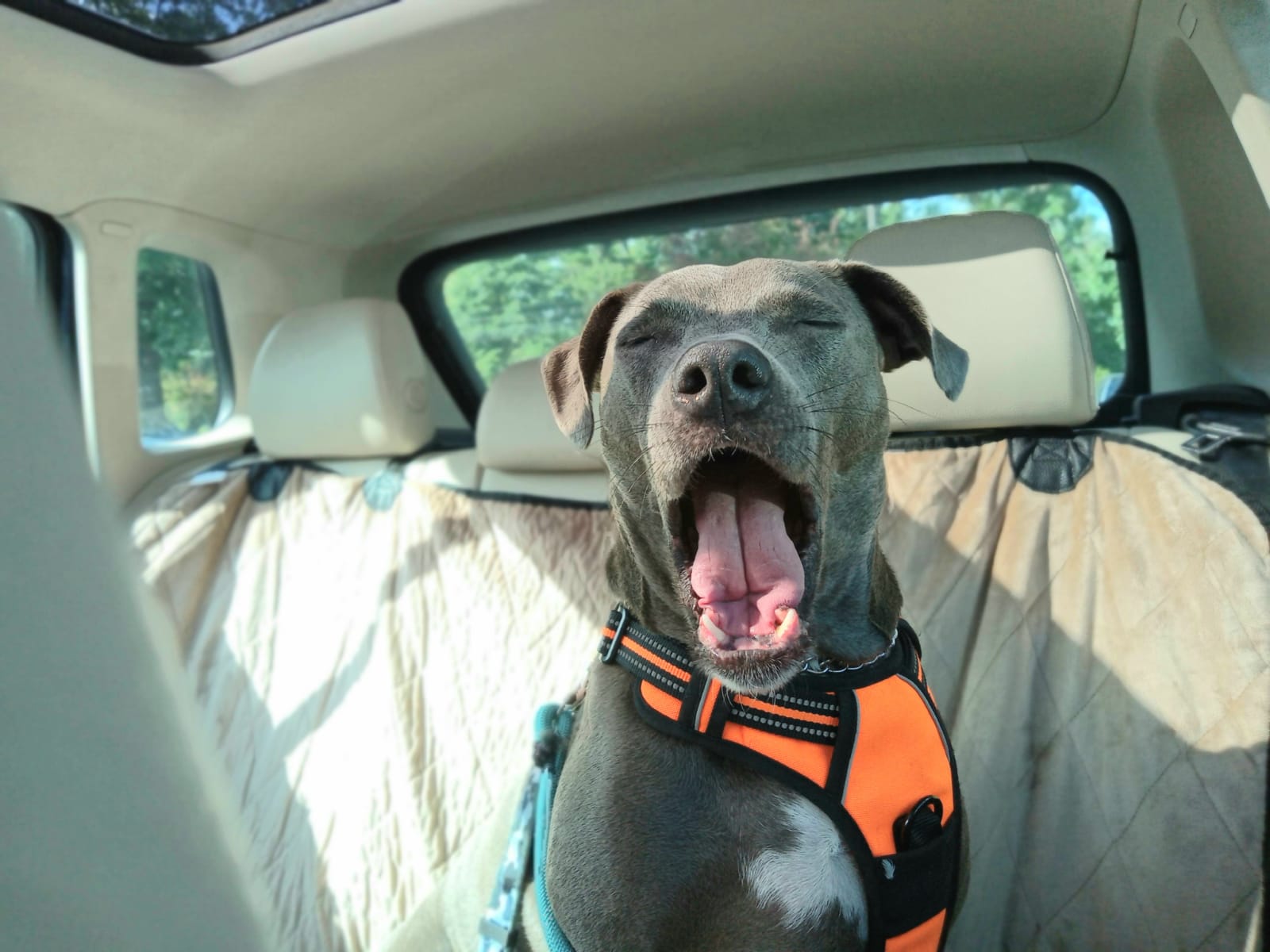
- Walks away, or shows stress such as yawning, lip licking or turning away
Finish with an easy round and stop while your dog is still keen. If the game often ends in mouthing, tone the wild part down. Our guide to puppy nipping and biting has more help for mouthy dogs.
Using It for Excited Greetings
Jumping often pays off for dogs because people react to it. This game flips that. Practice with family first, then ask a friend to play visitor:
- Keep your dog on leash so you can calmly guide them.
- The visitor walks in. If your dog jumps, the visitor freezes: hands to chest, looking away.
- When your dog sits or has four paws on the floor, the visitor (or you) rewards and greets calmly.
- If your dog gets up again, the visitor freezes again.
Our post on teaching your puppy to greet people covers door greetings in more detail.
Kids and Dogs: Playing Safely
Bring children in only once your dog settles quickly with adults and does not mouth during the game. Running and squealing wind dogs up fast, so an adult always leads:
- The adult runs the game. They say "Go wild" and "Freeze" and decide when it ends.
- Kids keep it small. A little dance on the spot, not laps of the room.
- Freeze. Stand still, fold your hands to your chest and look down at your feet. This is also what children can do any time a dog jumps or gets mouthy.
- Treats go on the floor. Children drop the treat by the dog's paws, or the adult hands it over, so little hands stay clear of teeth.
- Short and supervised. A couple of rounds, then calm time apart. Very young children can just watch.
If your dog has ever growled or snapped at a child, do not play this game with children. Keep them apart and get professional help.
Building Toward a Settle on a Mat
Once your dog freezes well, you can build "calm after fun" into a settle: lying down and relaxing on a mat or bed.
- Reward your dog for stepping onto the mat, then for lying down on it.
- When they relax there, with their head down or a hip rolled to one side, calmly place a treat between their paws.
- Play a short round of Go Wild, freeze, then point to the mat and reward when they lie down.
- Slowly build the time before you give your release word.
- Use the mat in real life: when visitors arrive, after play or during dinner.
How Dogwise Can Help
For puppies of around 16 weeks to 6 months, Puppy Foundations focuses on first manners and calm habits. For dogs of 6 to 18 months who jump, mouth and struggle to switch off, Adolescent Essentials works on household manners and impulse control. Our guide to the teenage dog phase explains why calm is so hard at that age.
Your dog lives in their trainer's home, not a kennel, and practices calm behavior every day. At handover your trainer shows you how to keep it going at home, with follow-up sessions to help.
Want a calmer dog at home? Book a free consultation and tell us about your dog. We will help you find the right next step.