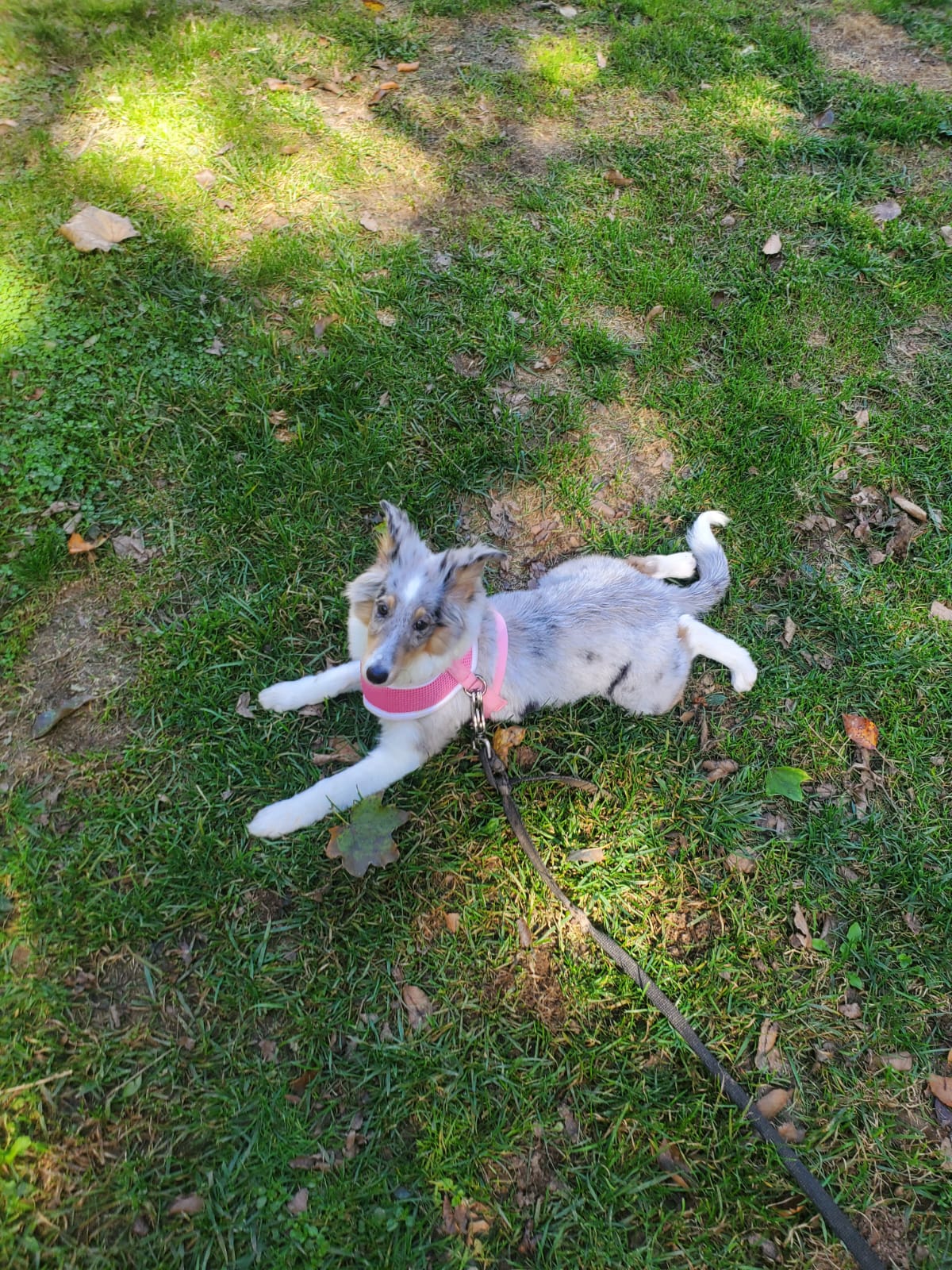
Your puppy has a beautiful sit. In fact, they sit for everything. Ask for a down and they sit. Ask again and they sit harder, looking very pleased with themselves. They are not being difficult. They are guessing, because sitting has paid off so often before.
Puppy push-ups are a quick, fun game that teaches your puppy to listen to the word you say instead of guessing. You mix three positions, Sit, Down and Stand, in an order your puppy cannot predict. This guide covers how to teach Stand, how to play the game, how to keep it fun and short, and how to make it harder as your puppy improves.
Why Play Puppy Push-Ups?
- Listening, not guessing. When the order keeps changing, your puppy has to pay attention to each cue.
- Self-control. Holding a position, then switching calmly to the next one, is great practice for an excitable puppy.
- A tired brain. A few minutes of thinking can settle a busy puppy surprisingly well.
- A useful Stand. Standing still on cue is handy for vet checks, grooming, drying muddy paws and putting on a harness.
What You'll Need
- Small, soft treats
- A quiet room with a non-slip floor
- A puppy who already knows Sit and Down. Our guides on teaching Sit and teaching Down cover both.
- A marker: a word like "Yes" or a clicker that tells your puppy the exact moment they got it right, always followed by a reward
- A release word, like "Okay" or "Free", that tells your puppy they are free to move
How to Teach Your Puppy to Stand
- Start from a sit. Hold a treat right at your puppy's nose.
- Draw the treat slowly forward. Move your hand straight out from their nose, at the same height, a few inches away from them. To follow it, your puppy has to rise onto all four feet.
- Mark and reward. The moment all four paws are on the floor and your puppy is standing, say "Yes" and give the treat while they are still standing.
- Repeat until it is easy. Practice until your puppy follows your hand into a stand almost every time.
- Lure with an empty hand. Use the same movement with no treat in that hand, then reward from your other hand. Your puppy learns to follow the signal, not the food.
- Add the word. Say "Stand" once, pause, then give the hand signal. Over many repetitions, the word becomes the cue.
You can also teach Stand from a down. Bring the treat forward and slightly up from your puppy's nose, so they push up onto their feet.
Stand Troubleshooting
- Your puppy walks forward several steps. Move your hand a shorter distance and more slowly, and mark sooner.
- Your puppy jumps up. Your hand is too high. Keep it level with their nose.
- Your puppy lies down instead. Your hand is too low. Bring it up to nose height.
- Your puppy sits straight back down. Mark and reward the moment they stand, before they have time to sit again. If they sit, simply start over.
How to Play Puppy Push-Ups
Once your puppy knows all three positions, start mixing them up. At first, reward every change of position. When that feels easy, ask for two or three changes before the reward.
Try short sequences like these:
- Starting with Sit: Sit, Stand, Sit, then reward.
- Starting with Down: Down, Sit, Down, Stand, then reward.
- Starting with Stand: Stand, Sit, Stand, Down, then reward.
Change the order every time. If your puppy can predict what comes next, they can stop listening and start guessing again. Say each cue once. If your puppy gets one wrong, calmly reset and make the next sequence shorter. Finish with your release word and a little play.
Keep It Fun and Short
- Play for a minute or two at a time. Two or three tiny sessions a day work better than one long one.
- Stop while your puppy is still keen. End on a success, even if that means asking for something easy.
- Use a happy voice. This is a game, not a drill.
- Mix in play. A quick game of tug or chase between sets keeps your puppy interested.
- Look after a growing body. Keep sets short, use a soft, non-slip surface and skip the game when your puppy is tired. If your puppy seems sore or reluctant to move, check with your vet.
How to Make Push-Ups Harder
Once your puppy is getting it right almost every time, raise the challenge one step at a time:
- Drop the hand signals. Use just the words, and keep your hands still at your sides.
- Change your position. Give the cues while you sit on the floor, kneel or stand turned sideways to your puppy.
- Add distance. Take one step away from your puppy before giving the cue, then two.
- Add duration. Ask your puppy to hold each position for a few seconds before the next cue.
- Add mild distractions. Try it with a toy on the floor nearby or another family member moving around.
- Play in new places. Move from the kitchen to the yard, the porch and quiet spots on your walk.
- Play when your puppy is excited. A burst of play followed by a few push-ups teaches your puppy to switch back into thinking mode. Our Go Wild and Freeze game works on the same skill.
Make only one thing harder at a time. When you add distance, keep the room quiet and the sequences short.
Frequently Asked Questions
How old does my puppy need to be?
Your puppy can start as soon as they know Sit and Down. Push-ups work for adult dogs too, and they make a handy quick refresher at any age.
My puppy keeps guessing. What should I do?
Slow down. Go back to hand signals for a while, use shorter sequences and reward every correct position. Pause for a second after each cue, so your puppy has time to think.
How Dogwise Can Help
Puppy Foundations is built for puppies of around 16 weeks to 6 months. Your puppy lives in their trainer's home and practices the basics every day in real life. Then your trainer shows you how to keep it going at home, with follow-up sessions afterward. For larger or fast-growing puppies who are heading into adolescence, Big Puppy is often the right fit. Puppies become teenagers quickly, and our guide to the teenage dog phase explains what to expect from around 6 months.
Want your puppy off to a great start? Book a free consultation and tell us about your puppy. We will help you find the right program for them.
