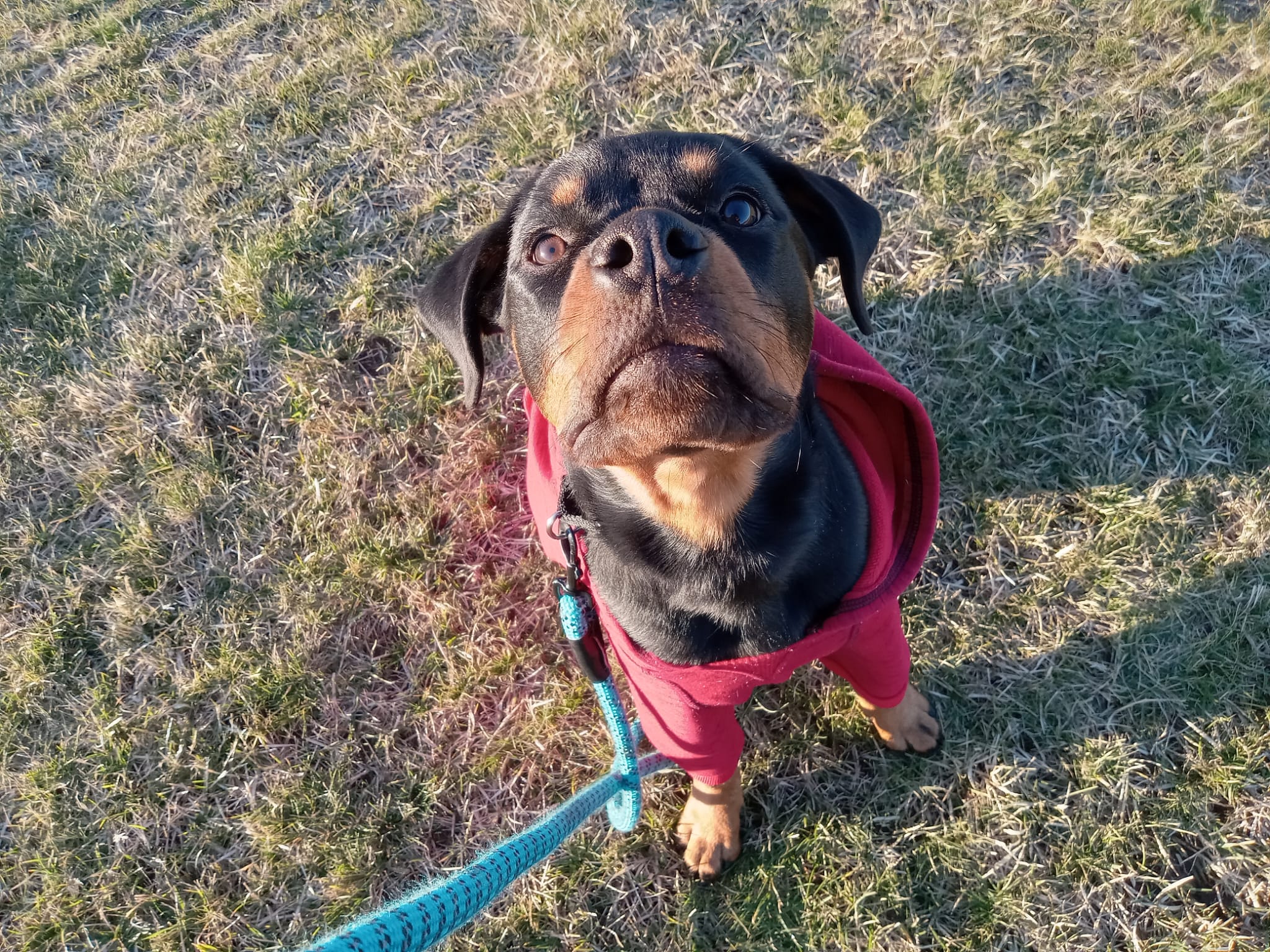
You clip on the leash, open the front door and your shoulder takes the strain before you reach the end of the driveway. Your dog zigzags from smell to smell, drags you toward every person and dog, and the relaxed walk you pictured turns into a tug of war.
Pulling is one of the most common problems families ask us about, and from your dog's side it makes sense. The world is exciting, people are slow and pulling usually works. This guide explains why dogs pull and gives you a step-by-step plan to make a loose leash the easiest way to get anywhere.
Why Dogs Pull on the Leash
- Pulling works. Every time your dog pulls toward a smell, a person or the park and gets there, pulling has paid off. Most dogs who pull hard have been rewarded for it many times without anyone meaning to.
- We are slow. Most dogs naturally move faster than people. Walking at our pace is a skill they have to learn.
- Excitement. New smells, sounds and sights are a lot to take in, especially for puppies and teenage dogs.
- Mixed rules. If pulling works with some people and not others, it still works some of the time. That is enough to keep the habit going.
If your dog barks, lunges or growls at other dogs or people on walks, that is more than pulling. Our guide to leash reactivity is the better place to start.
What You'll Need
- A regular leash and collar or harness, or the equipment your trainer set you up with.
- Plenty of small, soft treats. Walking nicely near distractions is hard work, so pay well.
- A marker. A marker is a word like "Yes" or a clicker that tells your dog the exact moment they got it right, followed by a reward.
- A release word. This is the word that tells your dog they are free to move, such as "Okay" or "Free". On walks it can also mean "go ahead and sniff".
- A walking cue, such as "Let's go" or "With me", used by everyone in the house.
Get Set Up Before You Start
Pick a side for your dog to walk on and stick to it while they learn. Hold the end of the leash in the hand furthest from your dog and keep that hand still, close to your body, so you do not tug back without noticing. Always reward from the hand on your dog's side, right next to your leg, so they do not drift in front of you for the treat.
How to Stop Your Dog From Pulling, Step by Step
- Reward the spot beside you. Start indoors or in the yard. Say your walking cue and take one step. The moment your dog moves with you on a loose leash, mark and feed beside your leg. Repeat, slowly building to three, five, then ten steps between rewards.
- Catch it all day long. Any time your dog chooses to walk near you, looks up at you or keeps the leash loose without being asked, mark and reward. These small moments add up.
- Stop when the leash goes tight. The second the leash tightens, stand still without pulling back. When your dog turns toward you or steps back so the leash goes slack, mark, reward beside your leg and walk on. A tight leash means we stop, a loose leash means we go. You can also add a no reward marker, a calm, neutral word like "Oops" that tells your dog that choice did not earn the reward, so try again.
- Change direction. If your dog keeps pulling, say their name once in a cheerful voice and calmly turn and walk the other way. Turn slowly, and only once there is a little slack, so the turn never jerks the leash. As your dog catches up and the leash goes loose, mark and reward at your side. On some early walks you may barely leave your street. That is normal, and it is still progress.
- Use sniffing as a reward. When your dog wants to check out a tree or a patch of grass, walk toward it only while the leash stays loose. When you get there, give your release word and let them sniff. Pulling gets them nowhere. Walking nicely gets them what they wanted.
- Build up slowly. Practice in quiet places first: the house, the yard, a quiet street, an empty parking lot. Move to busier routes only when your dog walks loosely in the easy ones, and reward more often around distractions. A hand target helps you keep your dog's attention as you pass something exciting. Our post on teaching "Touch" shows you how.
Everyone Walks the Same Way
This is where leash training usually succeeds or stalls. If one person stops when the leash goes tight and another lets the dog drag them along, pulling still pays now and then. Agree as a household on:
- The same walking cue and the same side
- Stopping every single time the leash goes tight
- No pulling over to greet people or other dogs
On busy mornings with no time to train, keep outings short or use the yard, so your dog gets no extra practice at pulling.
Common Mistakes
- Pulling back. A tug back usually makes a dog lean forward harder. Let stopping do the work.
- Not noticing the tension. Many owners are so used to a tight leash that they no longer feel it. A loose leash hangs in a soft curve.
- Rewarding too rarely. Reward often at first. As the habit builds, lean more on praise and sniffing breaks.
Frequently Asked Questions
Does my dog need to walk in a perfect heel?
No. For everyday walks the goal is a loose leash: your dog near you, moving at your pace and free to sniff when you say so. A formal heel is a separate skill.
How long does it take to stop leash pulling?
It depends on your dog, how long they have been pulling and how consistent everyone is. Progress can look like fewer stops on each walk, more check-ins and longer stretches of loose leash.
How Dogwise Can Help
Pulling often gets worse in the teenage months, and leash walking is a core part of Adolescent Essentials, our program for dogs of 6 to 18 months. For large or strong dogs over 12 months who know the basics but still drag you down the street, Strong Companion builds focus and control on real-world walks.
Your dog lives in their trainer's home, not a kennel, and practices loose-leash walking every day. At handover your trainer shows you the same steps on your own street, and follow-up sessions help with anything that slips.
Tired of being pulled down the street? Book a free consultation and tell us about your walks. We will help you find the right next step.
